Servicios
|
Recently, the National Administrative Department of Statistics (DANE in Spanish) published updated vital statistics data for the country, exhibiting a 14.6% decrease in births during the first four months of 2024 compared to the same months in 2023. This decline is more pronounced than the 11%…
|
|
Recently, the National Administrative Department of Statistics (DANE in Spanish) published updated vital statistics data for the country, exhibiting a 14.6% decrease in births during the first four months of 2024 compared to the same months in 2023. This decline is more pronounced than the 11%…
|
|
In recent years, remittance inflows from workers to Colombia have been increasing at rates that exceed the figures for economic activity growth. As a result, their share of GDP reached an all-time high of 2.8% in 2024, up from just 1.1% a decade ago.
|
|
Remittance inflows are mainly flows of foreign currency sent periodically by emigrants to their families in the country of origin for various purposes such as contributing to household support, children's education, the purchase of housing or other investments that generate capital income for the…
|
|
Whenever the monetary authority meets to make interest rate decisions, two key questions need to be answered: Where is the economy at? and Where is the economy headed? Answering these questions is no easy task. On the one hand, the lag in statistical information makes it difficult to have a…
|
|
Socio-economic strata are categories assigned to subdivisions of Colombian cities according to housing and environmental characteristics. They were established in 1994 to aid to cross-subsidize the price of utilities. At the time, they were considered an effective targeting alternative due to their…
|
|
In 2021, the price of beef grew about 31% and, as of February 2022, has seen an additional growth of more than 4.0%. As can be seen from Graph 1, this increase coincided with similar increases in chicken and pork prices up to October 2021 in contrast to the relative stability seen since 2017.…
|
|
In 2014, Decree 2616 introduced a change in regulation that lowered payroll taxes for low-income, part-time workers in Colombia. The reform made the mandatory contributions to social security proportional to the time worked when the monthly wage was lower than the minimum wage.
|
|
As a complement to the Blog published on 07 November 2023, this new entry continues with the review of the Technical Remarks prepared by two members of the Board of Directors of Banco de la República (the Central Bank of Colombia) (only in Spanish) —Bibiana Taboada and Mauricio Villamizar.
|
|
In 2015, Colombia signed the Paris Agreement, thus committing to reduce the exploration, exploitation, and consumption of fossil fuels such as coal, natural gas, and oil. A consequence of this agreement is the risk of turning fossil fuel-related assets into stranded assets, whose value would…
|
|
The mismatch between the skills of workers and the needs of companies is a problem that affects the efficiency of labor markets in developing countries. The vocational education sector as well as technical and technological education and skills certification are mechanisms for adjusting this…
|
|
The mismatch between the skills of workers and the needs of companies is a problem that affects the efficiency of labor markets in developing countries. The vocational education sector as well as technical and technological education and skills certification are mechanisms for adjusting this…
|
|
In September last year, a blog was published announcing the quarterly publication of the National Accounts by Institutional Sector (CNSI in Spanish), which include the national accounts by the National Administrative Department of Statistics (DANE in Spanish) and the financial accounts by Banco de…
|
|
Banco de la República's Financial Stability Report of the first semester of 2021 showed that during the first six months of 2020 (in a recessionary context derived from the global pandemic) total commercial credit from Colombian financial institutions to firms increased significantly. This…
|
|
The value added tax (VAT) exemption days policy has been used in the United States and in the European Union to encourage the consumption of goods and services that are important for lower-income households. In Colombia, after the crisis caused by the COVID-19 pandemic and to help boost the economy…
|
|
Since early 2024, interest rates on long-term Colombian government debt bonds, hereafter referred to as government bonds, have been increasing. This means that the government must pay more interest on its debt, so a larger share of its revenues must be allocated to cover such interest payments…
|
|
Since early 2024, interest rates on long-term Colombian government debt bonds, hereafter referred to as government bonds, have been increasing. This means that the government must pay more interest on its debt, so a larger share of its revenues must be allocated to cover such interest payments…
|
|
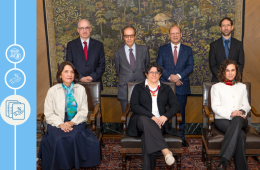
The Political Constitution of Colombia 1991 established the Board of Directors of Banco de la República (the Central Bank of Colombia) as the monetary, exchange, and credit authority of the State, collegiate body in charge of directing and executing the Central Bank’s functions.
|
|
At its meeting today, the Board of Directors of the Central Bank decided to continue with its program for the accumulation of international reserves through PUT options. The upcoming auction will be held on 28 February, in the amount of USD 400 million. The options will be in force between 1 March…
|
|
IntroductionThe macroeconomic scenario in Colombia changed substantially between 2020 and 2021. While some of the consequences of the Covid-19 pandemic are behind us, problems and imbalances persist and currently pose difficult challenges for economic policy. The pace of recovery in economic…
|
|
At a meeting today, the Board of Directors of the Central Bank of Colombia agreed to make no change in the intervention interest rate. Accordingly, the repo auction base rate will remain at 3.50%. This decision was based on the following factors:
|
|
Services:Gold Museum (only in Spanish)The Gold Museum of Banco de la República's mission is to preserve, research, catalog, and make known its archaeological collections of gold and silver work, ceramics, lithic, and other materials as a cultural heritage of current and future generations of…
|
|
Services:Luis Ángel Arango Library (only in Spanish)The Luis Ángel Arango Library is the most important public library in Colombia and one of the most visited in the world, with about 5,000 visitors a day.
|
|
Opening hours and services:Attention to the public (only in Spanish)Requests, complaints, claims, suggestions, compliments, and reports / Monday to Friday from 8:15 a. m. to 4:00 p. m.
|