Servicios
|
Evidence of the causal long-term relationship between budget deficit, money growth and inflation in Colombia is analyzed in this paper, considering the standard (M1), the narrowest (M0-Base) and the broadest (M3) definitions of money supply. Using a vector error correction (VEC) model with…
|
|
The reports of the Investment Budget and Operating Budget of Banco de la República (the Central Bank of Colombia) presented in this section correspond to the Board of Directors’ approvals as of year 2015.The Investment Budget includes the estimate of the resources necessary for the acquisition and…
|
|
Address: Cl. 1 # 3 - 73
Phone: (57) 300 269 0952
Fax: (092) 242 3898
Email: dsanchro@banrep.gov.co
|
|
Weekly
Bulletin on Economic Indicators (Available only in Spanish)
Daily Financial Indicators
|
|
At a request from the Ministry of Finance, Banco de la República last year carried out an investigation into the feasibility to use parts of the foreign reserves to buy back some of Colombia’s outstanding sovereign U.S.-dollar debt. This project resulted in two thorough technical…
|
|
The Banco de la República (Central Bank of Colombia) invites the academic community to submit papers for possible publication in the book titled “Equitable, Competitive and Sustainable Development of Agriculture in Colombia”. This publication aims to publish a set of articles that contribute to our…
|
|
|
|
Abstract
We bring together the largest meta-analysis ever conducted in the macroeconomic literature to investigate the effects of central bank credibility on monetary policy. With nearly 1,200 surveyed effects, we first confirm that: (i) conventional policy significantly affects inflation and…
|
|
It depends. When inflation increases due to excess demand from households and companies, there is no conflict. Closing the output and inflation gaps relative to the target requires raising central bank interest rates (benchmark rates) to cool the economy. In this case, monetary policy is said to…
|
|
Resumen
|
|
The Colombian authorities have decided to cancel the Flexible Credit Line (FCL) with the International Monetary Fund (IMF), in place since April 2024. This decision follows the IMF’s suspension of access to the FCL’s resources as of April 26, 2025, which will remain in effect until the current…
|
|
This paper evaluates the effects of capital account controls adopted in the past years by the FLAR’s member countries (Bolivia, Colombia, Costa Rica, Ecuador, Perú and Venezuela) on the efficiency of the banking sector, the economic growth and the volatility of output, consumption, and investment.…
|
|
Abstract
We show that capital controls (CC), by slowing-down firm debt-growth in the boom, improve firm performance during crises. Exploiting a tax on foreign-currency (FX) debt inflows in Colombia before the Global Financial Crisis (GFC) and multiple firm-level and loan-level…
|
|
Abstract
We study how capital controls and domestic macroprudential policy tame credit supply booms, respectively targeting foreign and domestic bank debt. For identification, we exploit the simultaneous introduction of capital controls on foreign exchange (FX) debt inflows and an increase of…
|
|
The effects of capital destruction are endogenized in a neoclassical growth model where the economy can optimally allocate part of its labor force to defend capital from being destroyed. The purpose is to explain the optimal allocation of the labor force between productive and deterrence activities…
|
|
This paper analyzes the evolution and impact of capital flows in Colombia over the past five years. An examination of the nature and composition of the capital flows indicates that to large extent they have originated in foreign direct investment, especially in the oil and mining sectors. The…
|
|
Published in "Critical Issues in International Financial Reform", Albert Berry & Gustavo Indart (editors) Transaction Publishers, New Brunswick, NJ & London, UK 2003.
|
|
Capital inflows and outflows often remind policymakers of the monetary policy trilemma and the several associated dilemmas. To tackle these dilemmas, an equilibrium model of capital flows is proposed. The model captures bouts of capital inflows and outflows with shocks to the emerging-market…
|
|
SEACEN – CEMLA Conference “The Implementation of Monetary Policy: Lessons from the Crisis and Challenges for Coming Years”Kuala Lumpur. Malaysia
|
|
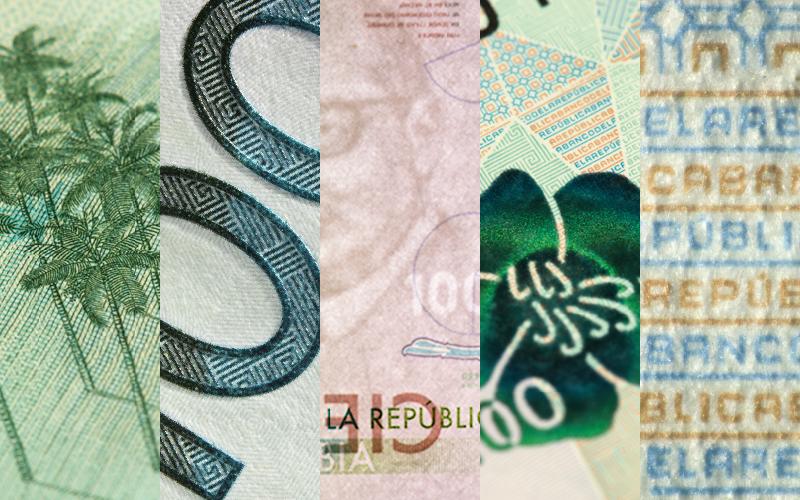
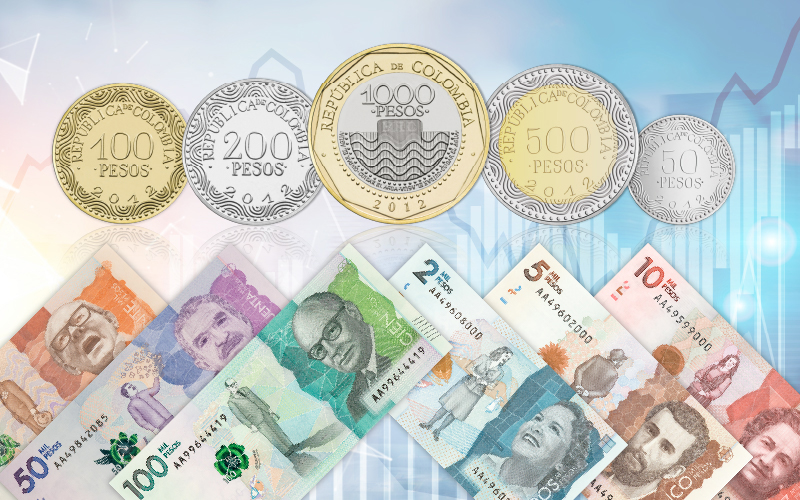
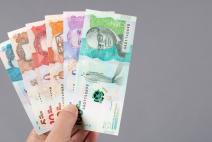
Under the Political Constitution of Colombia, Banco de la República, as the Central Bank of Colombia, has exclusive power to issue Colombian legal tender within the terms established by the law.Colombian banknotes, in addition to fulfilling the essential function of facilitating the daily…
|
|
Place of Birth: Ibagué, Tolima
Date of Birth: Septiembre 5 de 1946
Profession: Economist
|
|
Article published on BIS Review, Bankers’ Speeches Section.
|
|
The opinions expressed in this document are those of the authors and do not necessarily reflect the views of Banco de la República or its Board of Directors.
|
|
ABSTRACTThis paper analyzes the evolution of Cartagena's revenues, expenses and public debt in the period 2001-2018, considering the governmental crisis experienced due to several changes in local mayors during the last seven years. The results show, although the government crisis, fiscal revenues…
|