Working Papers Economics - Monitoring the Housing Market Cycle in Colombia: A Dynamic Factor Approach
The series Working Papers on Economics is published by the Office for Economic Studies at the Banco de la República (Central Bank of Colombia). It contributes to the dissemination and promotion of the work by researchers from the institution. This series is indexed at Research Papers in Economics (RePEc).
On multiple occasions, these works have been the result of collaborative work with individuals from other national or international institutions. The works published are provisional, and their authors are fully responsible for the opinions expressed in them, as well as for possible mistakes. The opinions expressed herein are those of the authors and do not necessarily reflect the views of Banco de la República or its Board of Directors.
The Housing Market Conditions Indicator (HMCI) provides a comprehensive and timely measure for monitoring developments in Colombia’s housing market and for complementing the analysis of the country’s economic cycle.
Approach
This paper analyzes the performance of Colombia’s housing market between 2004 and early 2026. Its main objective is to develop a tool that provides a timely assessment of the sector’s current conditions. To this end, it proposes the Housing Market Conditions Indicator (HMCI). The HMCI is a monthly index that summarizes information from 30 economic variables related to housing supply and demand. These include home sales, housing project launches, housing starts, building permits, housing loans, subsidies, inventories, employment in the construction sector, and builders’ expectations. The methodology condenses the information shared across these indicators into a single measure that captures the common signal embedded in the data. As a result, it provides a clearer reading of overall housing market conditions and their evolution over time.
Contribution
The housing market plays a central role in the economy, as it affects households, employment, credit, investment, and economic growth. For many families, housing is their main asset. For the economy as a whole, residential construction drives demand for industrial supplies, financial services, real estate activities, and labor. Understanding the housing cycle therefore not only helps track a specific sector, but also provides broader signals about the Colombian economy.
A deterioration in housing market conditions may anticipate lower investment, weaker credit demand, or reduced activity in related sectors. Conversely, a recovery may signal improved financial conditions, stronger confidence, and greater economic dynamism. The paper’s main contribution is the provision of a monthly indicator with nationwide coverage to monitor Colombia’s housing market. In addition, the analysis focuses on market quantities, namely actual decisions regarding housing construction, purchases, financing, and supply, rather than on price developments.
Results
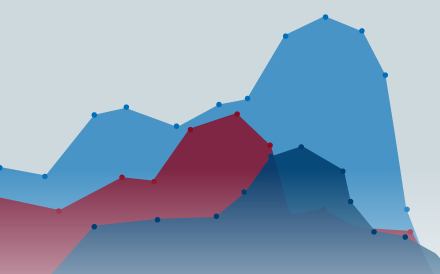
The results show that the HMCI successfully identifies the main phases of Colombia’s housing market over the past two decades. The indicator captures the boom of 2006 and 2007, the adjustment that followed the global financial crisis, the recovery between 2013 and 2015, the slowdown from 2016 to 2019, the severe shock caused by the pandemic, and the temporary boom observed in 2021 and 2022.
The indicator also points to a renewed downturn from the second half of 2022 through early 2024. This phase was associated with higher financing costs, an adjustment in households’ disposable income, a reduction in subsidies, and the depletion of household savings. Since 2025, a gradual recovery has emerged, supported by stronger sales, housing project launches, and improved expectations, although some construction-related indicators still exhibit lags.
The indicator also shows a positive relationship with housing prices and with key measures of economic activity, such as GDP, investment, and industrial production. Overall, the HMCI is presented as a useful tool for tracking housing market developments in real time and for complementing analyses of the Colombian economy’s business cycle.