Financial Markets Report – Second Quarter of 2026
The main purpose of these documents is to provide quarterly information on financial markets. Opinions and possible errors are the sole responsibility of the author and their contents do not compromise the Board of Directors of Banco de la República (the Central Bank of Colombia, Banrep).
During the second quarter of 2026, international financial markets continued to be largely influenced by developments associated with the conflict in the Middle East. In this context, global financial risk perceptions eased following the high levels reached at the onset of the conflict. This environment contributed to an improvement of financial conditions, declines in measures of expected inflation, and downward revisions to economic growth forecasts.

Global inflation and interest rates remained high amidst a highly cautious stance by central banks
- Inflation resumed its upward trend in major developed economies and remained above the central banks' targets.
- Markets revised their interest rate expectations upward.
- During the quarter, capital flows to emerging economies declined amid narrower interest rate differentials relative to developed economies.

In Colombia, the macroeconomic and financial environment remains challenging amidst inflationary and fiscal pressures
- Inflation increased vis-a-vis the previous quarter and remained above Banco de la República's target.
- Banco de la República (the Central Bank of Colombia, Banrep) increased its monetary policy rate to 12.00% at its June meeting.
- During the second quarter of the year, inflation expectations declined relative to the first quarter, although they remained well above Banrep's target.
- Colombia's sovereign risk premium declined following the presidential election results; however, it remained elevated vis-a-vis its regional peers.
- Risks associated with inflation and the external environment persist.
- Looking ahead, the key drivers of local markets’ performance will be the trajectory of fiscal metrics, the external environment, and the monetary policy stance.
Debt markets reflected an environment of higher inflation and interest rate expectations, alongside episodes of increased risk aversion, in line with developments surrounding the conflict in the Middle East and concerns over public finances.
- Globally, sovereign bond yields showed mixed performance.
- In Latin America, most sovereign bonds posted gains amid higher risk appetite and portfolio inflows into bonds.
- In Colombia, TES (Colombian government bonds) posted significant gains vis-a-vis their regional peers, driven primarily by the decline in sovereign risk aversion after May.
- This performance reflected the market’s expectations of fiscal consolidation.
- Market liquidity improved slightly but remained below 2025 levels.
- In this context, foreign investors increased their TES holdings in both the spot and derivatives market (non-deliverable forward - NDF).
- The Ministry of Finance and Public Credit completed the settlement of the total return swap (TRS) transaction in May, which had been entered into with international banks in September 2025.
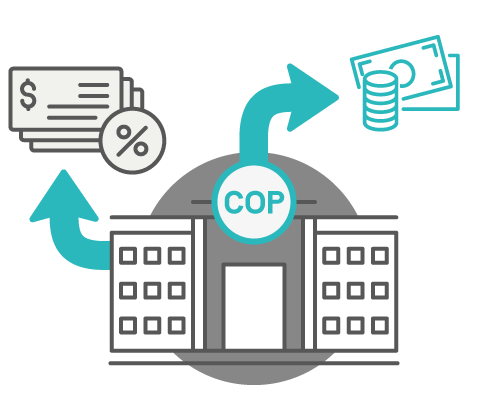
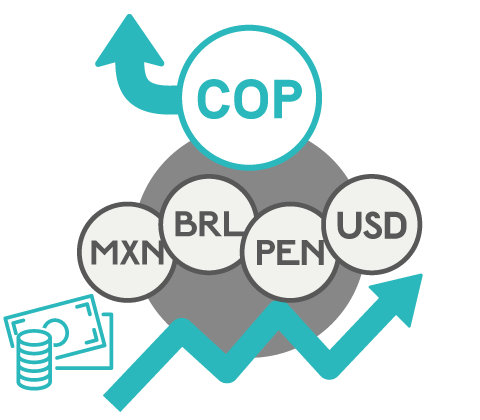
The Colombian peso (COP) was volatile and appreciated significantly vis-a-vis the U.S. dollar, outperforming its regional peers.
- The U.S. dollar (USD) strengthened vis-a-vis the basket of currencies comprising the developed market currency index (DXY; 1.22%) and followed an upward trend throughout most of the period.
- The appreciation of the Colombian peso (COP) was supported by both external and idiosyncratic factors, including lower domestic risk aversion, higher oil prices (particularly in March), and still-attractive interest-rate differentials.
- Foreign exchange market liquidity indicators improved vis-a-vis the previous quarter.
- The FX derivatives market corrected the distortions observed at the end of 2025 and during 1Q26.
Stock markets recorded gains amid an environment with a stronger risk appetite.
- In the United States, performance was driven by strong corporate earnings, particularly in the technology and artificial intelligence sectors.
- Toward the end of the quarter, expectations of a more restrictive monetary policy stance in the United States were revised downward.
- In Latin America, equity markets posted declines during 2Q26, reversing the upward trend observed in previous quarters.
- In Colombia, the MSCI COLCAP1 equity index posted a quarterly negative return, broadly in line with the regional trend.

Index of Boxes in the Report

1 ↑ The MSCI Colcap Index is a Colombian stock market index calculated by Morgan Stanley Capital International (MSCI), which tracks the performance of the 20 issuers and the 25 most liquid stocks in the country.
 Reports
 Boxes
Boxes