Financial Stability Report – First Half of 2026
The main purpose of these documents is to provide semiannual information on the vulnerabilities and risks of the financial system. The views presented and potential errors are the sole responsibility of the authors and their contents do not compromise the Board of Directors of Banco de la República
The Colombian financial system remains resilient despite heightened international uncertainty, tighter domestic financial conditions, and fiscal challenges.

The escalation of geopolitical conflicts has heightened global uncertainty and adversely affected markets, economic growth, and inflation.

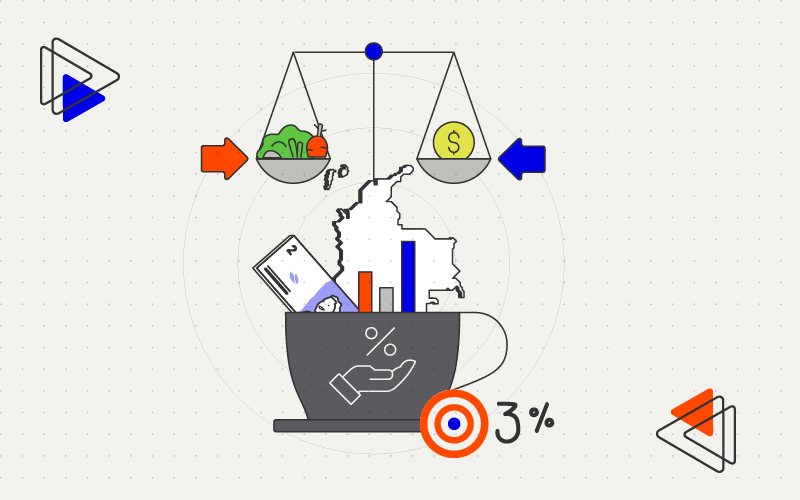
The Colombian economy continues to grow at a solid pace, driven primarily by domestic demand. However, financial conditions have become more restrictive amid heightened volatility, rising fiscal risks, and inflation remaining above Banco de la República’s (the Central Bank of Colombia) target.
Credit institutions maintain sound capital and liquidity levels. Their assets continue to grow, driven by lending expansion and increased investments in government securities. In addition, profitability has also improved, supported by lower delinquency rates. Nevertheless, these trends moderated in the first quarter of 2026 and could continue to moderate throughout the rest of the year.
An increase in interest rates across maturities would reduce the financial income of credit institutions, although solvency levels would remain adequate. The institutions most exposed are those extending long-term, fixed-rate consumer loans while relying on short-term funding, whose costs increase more rapidly when interest rates increase.

Non-bank financial institutions continue to increase their relevance within the Colombian financial system and remain highly interconnected with credit institutions. In addition, collective investment funds have reached record-high asset levels and strengthened their liquidity buffers.
Households have continued to increase their debt, particularly with entities not supervised by the Financial Superintendency of Colombia (SFC in Spanish), which has raised their debt service burden since January 2025. In this context, it is still essential to closely monitor growth and quality of the loan portfolio across both supervised and non-supervised entities.

Corporate lending shows signs of recovery. However, corporate debt continues to grow at a slower pace than economic activity, amid heightened uncertainty and weak investment. Delinquency rates on these loans have declined, although significant differences persist across sectors.

The increase in holdings of government securities raise financial institutions’ exposure to changes in market conditions, particularly in the context of fiscal pressures. However, their risk mitigation strategies help keep potential losses low and contained.

Stress tests confirm that credit institutions have sufficient capital buffers to absorb potential losses, even under an adverse and unlikely hypothetical scenario.


 Reports and Updates
  Boxes
Boxes  Press Releases