

It means that people and businesses trust the Bank to adjust the policy interest rate when inflation changes may prove persistent, with the intent of keeping inflation low and stable. This credibility helps prevent short-term price fluctuations from becoming persistent inflation.
Publication date
The Colombian Constitution and law establish that Banco de la República’s (the Central Bank of Colombia) primary mission is to preserve the purchasing power of the national currency, consistent with overall economic policy. The purchasing power of the Colombian peso depends on the prices of goods and services traded in the economy, which in turn are determined by the interaction of supply and demand. Supply reflects the decisions of the businesses that produce and sell these goods and services, while demand is driven by the spending decisions of businesses, households, and the government. Inflation is the sustained increase in the prices of a broad basket of goods and services consumed by Colombian households, and it’s measured monthly by the National Administrative Department of Statistics (DANE, by its Spanish acronym).
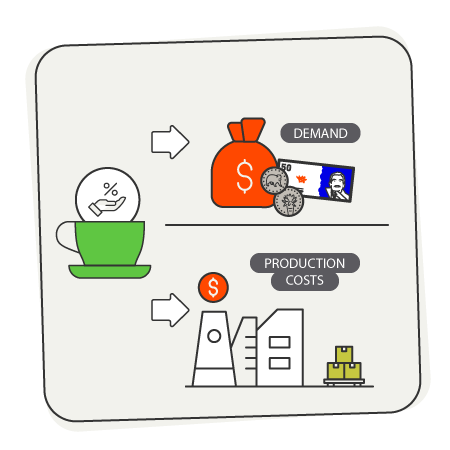
To fulfill its mission, the Bank controls the short-term interest rate (usually an overnight rate) through liquidity operations with commercial banks. This interest rate, set by the Bank and known as the policy interest rate, is then transmitted to the interest rates that financial institutions charge on loans and pay on deposits. These rates, in turn, affect businesses’ and households’ incentives to spend or save. Interest rate movements also influence the exchange rate and businesses’ and households’ expectations about future inflation, which in turn affect their spending decisions and businesses’ costs.
The Bank influences prices in the economy through the effects of the policy interest rate on demand and on the production costs of goods and services in the country.
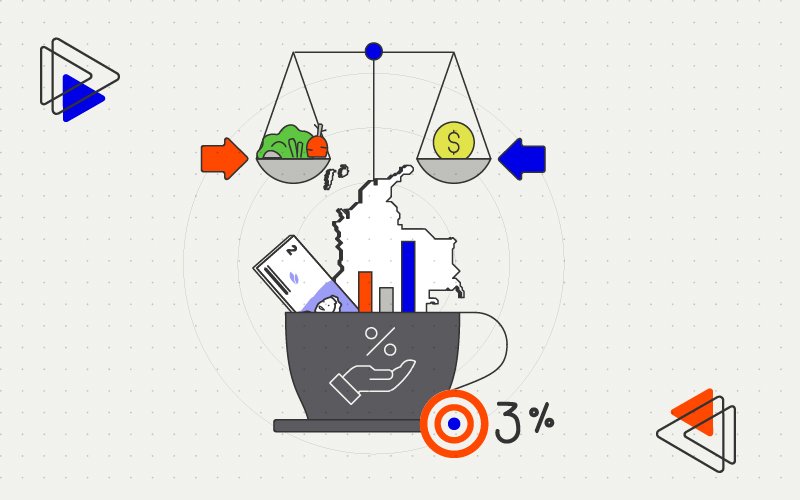
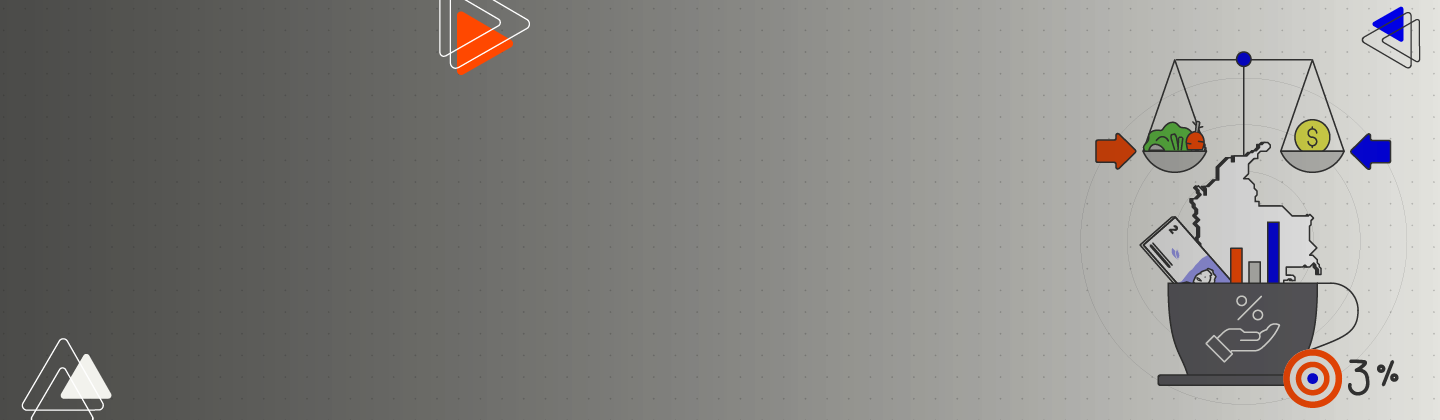
For example, when the Bank raises its policy rate, lending rates in the loan market increase, as well as the interest rates paid on deposits. This discourages spending by households and businesses and tends to reduce the prices of goods and services. Conversely, when the Bank lowers its policy rate, interest rates across the economy fall, encouraging spending and tending to push prices up. This is the fundamental logic behind the monetary policy decisions Banco de la República uses to achieve an annual inflation target of 3%.
Supply and demand in the economy can fluctuate for reasons that are unrelated to the Bank’s decisions. Therefore, the Bank continuously monitors economic conditions so it can respond appropriately to these fluctuations. When price changes are driven by shifts in demand, the Bank can offset them by changing the policy interest rate. But when price changes are the result of temporary shifts in supply, and it is expected that prices will stabilize on their own, the Bank will not intervene. For example, a drought may drive up food prices, which in turn will push up inflation. Nevertheless, once the effects of the drought subside, food prices revert to their normal behavior and inflation returns to its pre-drought level. In this example, the Bank does not need to adjust monetary policy because the upward path of inflation reverts on its own.
However, price fluctuations caused by supply-side changes may persist beyond the original shock and result in higher inflation for an extended period. This is partly because many prices adjust automatically in response to past inflation, a process known as indexation. In the drought example, the increase in inflation resulting from higher food prices may cause other prices, including rental prices wages, to adjust automatically at a faster pace in the future.
In addition to indexation, another lasting effect of a temporary supply shock on inflation results from the change in expectations by businesses and households about future inflation, also known as inflation expectations. These expectations matter because they influence how prices and wages are set or negotiated across the economy. For example, if workers expect inflation to rise in the future, they will negotiate larger wage increases to protect their purchasing power. Similarly, if businesses anticipate higher future inflation, they will raise their prices more quickly in anticipation of larger cost increases. In this context, a temporary supply shortfall - such as that created by the aforementioned drought example - can lead to a more lasting increase in prices, if households and businesses believe that higher inflation will persist and include that expectation into their wage-setting and pricing decisions. These effects, through which an initial price shock spreads to other prices and wages, are known as second-round effects. They can make inflation more persistent through mechanisms such as indexation and changes in inflation expectations.
Because expectations about future inflation influence current inflation, the central bank’s credibility is a key component of monetary policy. When monetary policy enjoys a high degree of credibility, businesses and households expect the central bank to adjust the policy interest rate quickly and sufficiently when there is evidence that inflation may prove more persistent. This credibility also allows the economy to experience short-term price changes from unexpected shocks without these fluctuations causing inflationary spirals (self-reinforcing cycles of price and cost increases) because of persistent second-round effects. Moreover, when central banks enjoy high levels of credibility, variations in future inflation expectations tend to be small, and only minor policy interest rate adjustments are needed to restore price stability.
When monetary policy is highly credible, businesses and households expect the central bank to adjust the policy interest rate quickly and sufficiently in response to any indication that inflation may become more persistent.
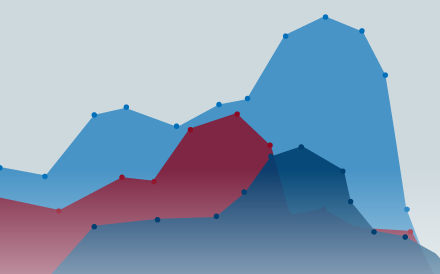
Given the importance of inflation expectations in determining inflation, Banco de la República continuously monitors various measures of these expectations. Among other measures, the Bank uses surveys conducted with business managers and financial intermediaries to gauge expected future inflation. For example, Graph 1 shows the results of the monthly survey of a sample of financial intermediaries on their inflation expectations for the end of each year (blue line), 12 months ahead (orange line), and 24 months ahead (green line), as published in the most recent Monetary Policy Report. Essentially, the graph shows inflation expectations at different horizons for each point in time: the end of the current year, one year ahead, and two years ahead.
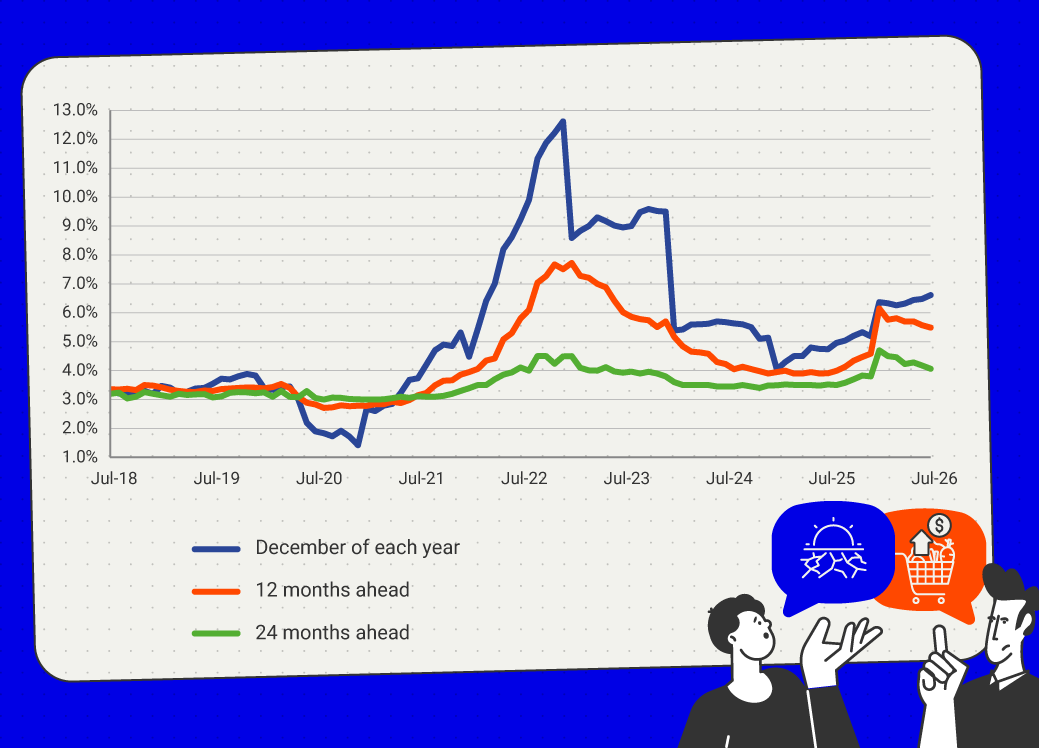
Source: DANE; Banco de la República calculations and projections.
As shown, short-term inflation expectations (blue line) are much more volatile than expectations for inflation one or two years ahead (orange and green lines). Although respondents recognize that an upward price shock can push inflation above the target in the short term, they expect inflation to decline and move closer to the target over longer horizons. In other words, during the period analyzed, inflation is expected to decline after the shocks occur. This is one measure of the Bank’s credibility, as it reflects the conviction that the Bank will act to contain inflation in the future.
In 2026, the graph shows a sharp increase in inflation expectations across all the horizons considered. This increase was driven by the unexpectedly large increase in the minimum wage, which raised expected inflation not only for the end of 2026 but also for 2027 and 2028, reflecting the persistent effects of a shock of this magnitude. Nevertheless, the graph also shows that one and two year ahead inflation expectations did not rise as sharply and have gradually declined.
This decline in inflation expectations largely reflects the credibility of the Bank’s monetary policy, which is crucial for observed inflation to eventually converge to the target.